A practical framework
Six areas to understand before agreeing support.
No single checklist can describe a person. These areas are prompts for a fuller conversation, not a substitute for individual assessment.
 Linden Hearth
Everyday support
Support is most useful when it responds to real difficulty without taking over tasks unnecessarily. The starting point is a conversation about habits, abilities, preferences and where assistance would make the day easier.

A practical framework
No single checklist can describe a person. These areas are prompts for a fuller conversation, not a substitute for individual assessment.
What time does the person usually wake, eat, rest and go to bed? Which parts of the routine are important enough to preserve wherever possible?
Which activities remain comfortable and which now create frustration, fatigue or risk? Support can then be discussed around the task rather than assumed from age alone.
How does the person move through a room, use furniture and navigate shared spaces? Clear information can help shape practical conversations about the environment.
How does the person prefer choices to be explained? Who should be involved in family conversations, and what information needs to be kept clear and consistent?
Which foods, timings and everyday habits make mealtimes feel familiar? What practical considerations should be understood before support around eating is discussed?
Who knows the person’s routines well, who should be kept informed and which details from home are most useful when discussing a change of setting?
Respect and autonomy
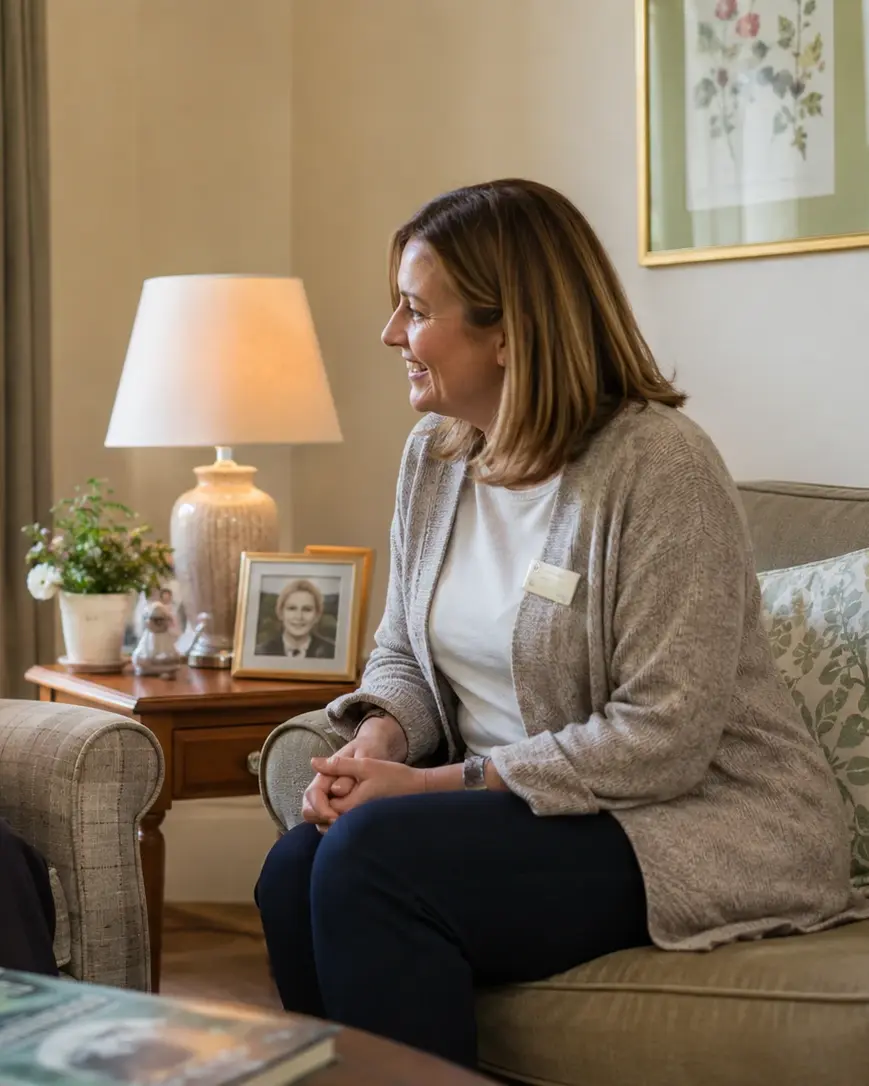
The way help is offered matters. Explaining what is happening, allowing time for a response and keeping choices visible can preserve a sense of control even when practical assistance is needed.
Needs and preferences can also change. A plan that made sense at the start may need to be revisited as routines settle, abilities change or family circumstances evolve.
Sensitive information
A general web enquiry is not the right place for detailed medical history or highly sensitive personal information. The initial form asks only for contact details and the broad topic you want to discuss.
If more detailed care information becomes necessary, the appropriate way to provide it can be discussed directly. Our Privacy Policy explains how personal information submitted through the website is handled.
Read the Privacy Policy ↗Conversation before commitment
A family may be looking for more structure, more help with daily tasks or a setting that feels easier to manage than the current arrangement. A first conversation can establish what matters most and what questions still need answering.
Start an enquiry